
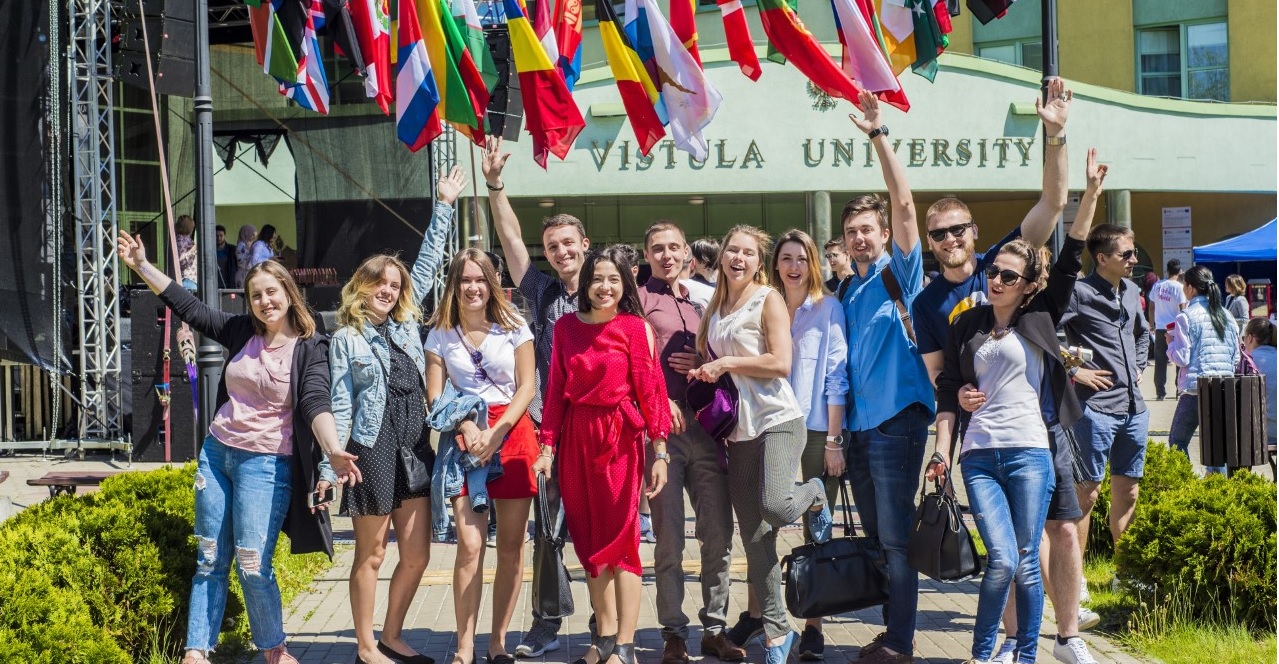
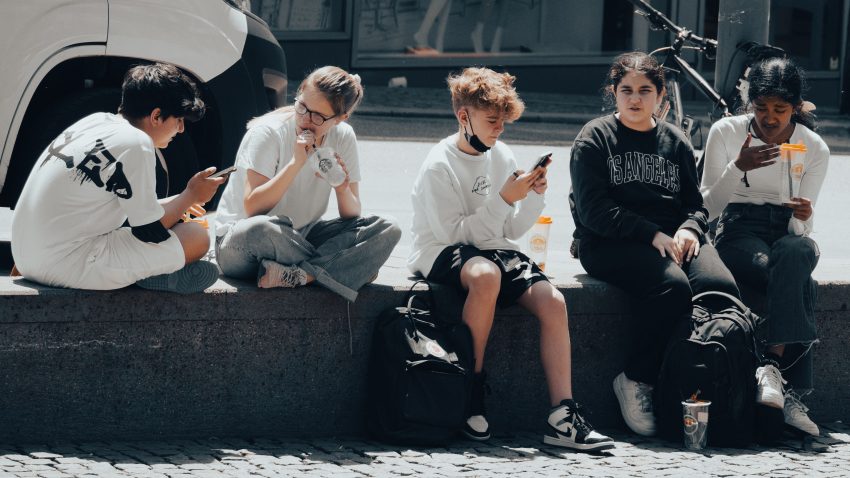
Walking down the street, you can meet completely different people. Can be a girl wearing straight brown trousers with a white shirt. Can be a guy wearing black jeans with chains and an oversized hoodie. Makeup varies too – from soft, pink blushes on the cheeks to long black eyeliner wings. You don’t see them together; yet both of them grew up at the same time. For they are the Generation Z. Raised by millennials, it is a generation that, to some extent, has divided itself into so-called “normies” and “alternative people”. The two like poking at each other a lot. Upon a closer look, one asks, but does this division actually exist? Or could they have far more in common than they think?
Generation Z (1996–2012) is people who grew up in the era of the internet, social media, and smartphones. In such an environment, ideas and opinions spread fast, which leaves its mark on a person. Under pressure from society, subcultures and counterculture movements were formed.
The first group is alt people. They are generally characterized by wearing black oversized clothing, chains, piercings, spikes, dyed hair, and bright makeup. The second group usually includes those who do not particularly “stand out”. They are also called normies or NPCs (abbreviated ‘non-playable characters’). They wear clothes that can be found on the shelves of mass-market stores, such as Zara, and use natural colors both in their hair and makeup.
Importantly, both often follow trends dictated by social media. As a result, many members get so entangled in them, so that neither group truly stands out. This, however, does not preclude hostility among their kind. It is obvious that algorithms create a kind of bubble where different styles and views are formed—and where, eventually, these groups develop distinct traits. But the point is that they are seldom unique on their own. They mirror each other, neither fully belonging to anything or anywhere — too “strange” for normies, too “basic” for alt people (the terms both groups would use).
What’s more, there is mutual contempt between them, despite the fact that they are closer than ever. The only difference is whose influence they have fallen under. Some are influenced by the cult that revolves around Instagram models, while others were taken by rock culture. In time, many begin to follow idealized images that are actively promoted on social media.
In their desire to stand out from the crowd, people often end up blending into it. Here is an example. A person wants to find their own style and behavior but instead takes a ready-made model they have seen on the internet. This happens because people are often afraid of being rejected, and even when they do try to be special, they dress on the safer side of what is already accepted by a certain part of society. In consequence, people who want to look different seek out people who look different, so that they could look different, and so they could look different like them but not quite like them, and so they could happily look different together. By looking different they form their curious little circle of those different.
This is exactly what is happening with Gen Z. Notably, however, despite following trends on both sides, they still consider themselves fundamentally different. Few people stop to think that both groups are influenced by fashion, and instead reason like ‘if clothing and behavior are different, then their views and values must vary as well’. This leads to conflicts on the streets, bullying in schools and social media, and discord within society. And, although Gen Z grew up in the era of the internet, they are still not able to control its influence.
Therefore, meaningless conflict prevails, stemming solely from appearance-based prejudices, while the main principle of formation of these distinctions remains the same. Both normies and alt people strive for self-expression, but they do it using already existing models imposed by society, just from different angles.
This shows how human perception can lead to serious misunderstandings in society. Unwilling to develop a more conscious approach to such differences, even in the 21st century, people are still inclined to judge based on appearance, as it could be in the case of Gen Z. And unfortunately, this is far from the only example of such an issue in our world. In fact, it betrays a larger issue at play. Impatient to differences, people judge and punish each other for looks, despite the fact that anyone has to look somehow. Despite acknowledging that fact, as a form of common-sense or otherwise, and that it is now always within reach—the ability to glimpse at how each and everyone is genuinely unique—on social media—on the streets—we cannot help but hold on to prejudice.
Yuliia Filipchenko
Photo: Pexels – Amin Kaabi