

an associative chain: coal—smoke—grey—bloke—whiskey—rum—heavy sum.
To get this off my chest first, or rather, to free up some space in my mental attic—
Peaky Blinders: The Immortal Man is likely to be warmly received by those in lustful anticipation and with benumbed critical view. Still, be it as it may, but a physician’s verdict would be that some form of hyper-attachment is at play here. The characters who populate their minds so fondly are here, look, there he is! Is it not a joy? But okay, let us not trample someone else’s excitement. Everyone—and some to their embarrassment —has furballs they find ugly and misshapen and soaked with spittle, that they would still ensconce fugitively into the very bottomest drawer—yea, that one, you see a tiny scratch mark on the plank? It is a darling. So same issue here. For all its merits, it is hard to call it a movie by any objective metric, even if it bobs with the same beat as one. Amour has a long life cycle, and blinds the senses far too well.
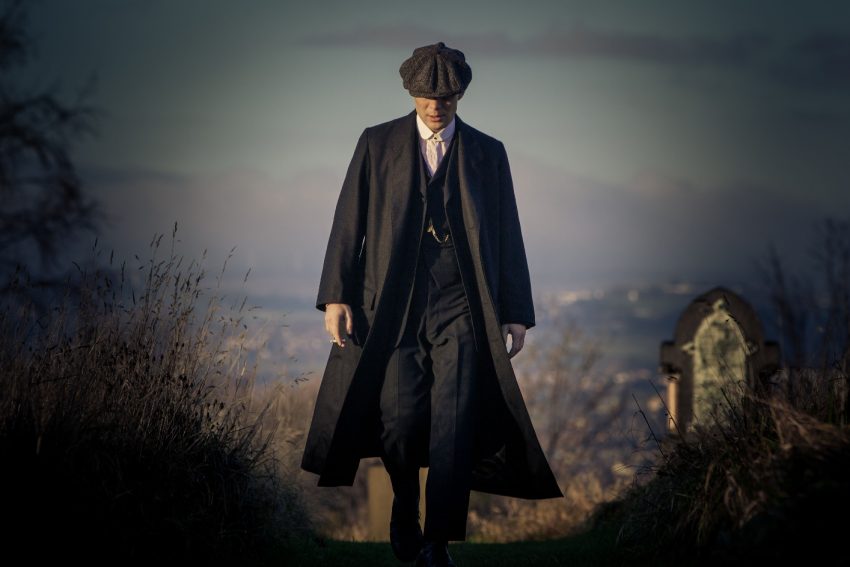
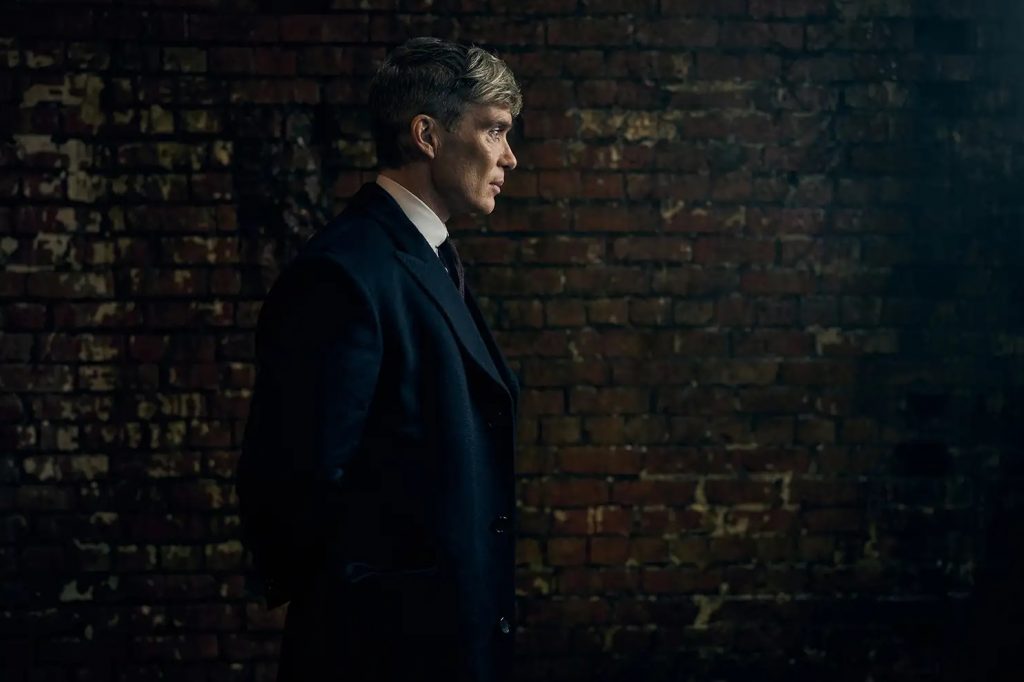
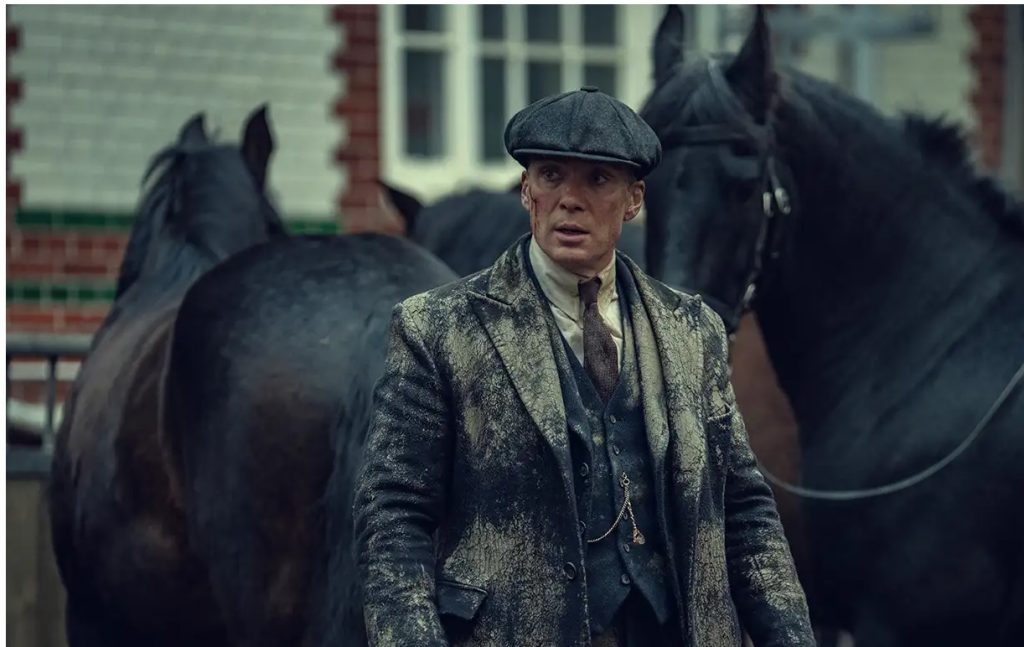
The movie has no narrative structure. It is however markedly sublime, absolutely gorgeous-looking. Colours and shapes, although quite poignantly stylized (yet not so without taste, PB wears its unnaturalist colour palette on its sleeve), never itch the eye. That is to say, you delight in the image without pshawing ‘Ah, how flashy…’ (or your migrant’s warlike chant has the better of you, spills to-fore with its ‘Бл-ха, ну ви–нулись.’)
Alas, it is not enough. Brushing aesthetics aside, what one sees is a disjointed fever dream that leaves more loose ties than it means to leave, and far more than it means to tie up. If I were among the uninitiated lot, I would, for one, find myself as hopelessly disoriented and alienated from things around me as pubescent conscripts in hotzones do. For two, I would get concussed with how—disproportionally to my knowledge—I should care about them. But let us proceed step-by-step. So there is a faint trail of direction, that surely we must have come from somewhere (see the steps bending left, around that old trunk and the cart?). But to you it is incomprehensible. You blink daftly, your comrades (the series’ devotees) goad you on, you’re told to turn around and to keep moving. Don’t loiter behind, and so on.
The above is graphomania, of course. But basically, one gets thrown into that hodgepodge of people who—for we are given cues—should bear some relation to one another. That there is an unresolved conflict underneath, a personal drama, some open wounds. We are somewhere between hinted and told. The picture assumes you already know the characters. Maybe you’re supposed to. But, in this case, it would be better to call things their proper names, and not mislabel this a movie. If we do, we risk dampening our spirits.
Worse yet, not only does it participate in expository amnesia, it does so with a full brigade.* A lot of new, weathered faces. Like a freshly drafted beau—pulling his rubber boots on—shirt half-buttoned—who darts out of the barracks—so do we have no time, apparently, to introduce the characters at proper length. Understandably, for we have two miserable hours. But what ensues is a complete lack of interest, relating to a character like one does to a chair. And here the odds are in the chair’s favour. But okay, suppose we are viewers with unparalleled compassion. Suppose we can usher in interest from within. We might make some progress in that avenue. Dismayingly, it would be so up to a point—the point in question being tension, or lack thereof.
I should elaborate on this. Properly put, the movie is not starved of tension. The opposite is universally true. What gets in the way is how tension makes an entrance. For, by the looks of it, it seems to have a peripatetic bout. It enters the stage, begins the number, reaches the point of rising action, and scuttles away to the offstage. Anxious, it draws the curtains a bit to the side, to look at the disheartened audience. Mustering up courage, it comes back to the stage. Same thing.
Every time we get a good measure of tension something must cattily throw it off. Might be another narrative thread. Might be an exhausted timeframe. Because everything must happen so fast, and nothing should be left out, and it—which is insurmountable—must also make sense, the narrative grabs whatever it can get its hands on as it rushes along. For us as viewers, this better resembles difficulties with digestion than a measured narrative. Intermittently, and with pain.
But there’s more. And that is what I anticipate to be, for some, a reason enough to quarter the creators. The movie kills off its precious characters so blatantly, so blandly, without any apparent reason to do so. It must be said that, in relation to the fabula—that is, the whole story, the lore—this purge can justify itself. But, again, it is to go out on a limb and rely on how robust is your fanbase’s devotion and love. If I were a newbie, for me it would seem that deaths in the movie were added for comedic effect.
More than anything else, our empathy suffers. Because, in effect, this inundated progression bars care. We end up rooting-for by habit, which really should make us wary and give us a pause. What kind of interest is this? I would quit rambling were it an incongruous mass all along. But it was never the case with PB. For five solid seasons, it was not the case (season six is debatable). Scolding it for its mistakes, therefore, is a love gesture.
A quick pass over characters before we conclude. Even more dishearteningly, there are a lot of fired blanks. John Beckett (Tim Roth) is offensively seductive as a villain. It is a compelling mixture of laissez-faire and political avarice. But because he’s put in the confinement of that format we never get to see his motivations. From first impressions, it is a superbly intriguing character. One is made wonder, how can he treat treason so mundanely? Well, we will never know. What is worse, after the watch, we wouldn’t care to know.
Over what can be called the movie’s duration, he appears briefly at several moments, and in the last showdown. We get a foretaste of his lamentable ethics. We get a real sense of a flawed character. But that is about it. Again, one is amiss of how Beckett got to be who he is. Why does he despise the British government? No clue. On top of that, there is the ecliptic Oswald Mosley (Sam Claflin) from S5. Upon this recollection, the fault discloses itself in full. It becomes obvious that John Beckett’s viciousness is merely laughable to Mosley’s blinding and blinded ideologue. The latter was a character of his own, a caricature, too, from time to time. But he was interlaced with such complexity it rendered him a memorable and chilling figure.
Another problem is the son. Duke, Thomas Shelby’s son (Barry Keoghan), fares better than Beckett but not by a mile. Through him, we get some real and visceral psychologism. Their relationship is tragic and inherently taut. For where they stand, in that age-old conflict, father-son, a human being is yet to find a resolution. There could be none. So we rear hopes for high-key drama, which would be well-deserved. In fair terms, Duke is Tommy’s foil, and he mirrors him everywhere where it is necessary. Hence, by observing Duke, we really reexamine Tommy. Yet this is never to materialise.
I said he fares better because, well, he simply has more time to fare. With ample screentime (relative to the whole thing), we get to see turmoil, discord, friction. It is gripping to see what is, in essence, a child who was forced to grow up fast.
Same issue with his second best, Elijah (Jay Lycurgo), who really is an aged-down version of Isiah, be it on-purpose or not. Maybe for parallelism. But we fail to find a reason. Isiah is very interesting because he looks comparably sprightly to his morose compagnons. More than extras, he feels embedded and necessary. From what we can construe here and there Isiah might be important to Duke. Possibly, he might be of that milder and more boyish temper that Duke prohibits himself to be. Possibly too, Isiah keeps Duke apiece in his liminal half-man, half-child state, without letting him come to ruin. All this has to stay conjectural for this is where the line breaks.
What was a major part of fun in PB is rethinking history. The story’s momentum was largely stirred by a lot of whimsical ‘what-if’s of real, well-documented events. It bore some unforgettable characters. Cleverly executed, it did not feel like unnecessary encroachment. Nor does it feel so in this movie. Yet, in this movie, it feels simply dispensable. As soon as one looks closely at the premise, it becomes evident that it could as well be whatever, for all that the story strives towards is to conclude the tale of Tommy Shelby. Nazi Germany or not, this war or that. It might as well happen on Mars. I would hazard a guess, it was not cheered on by that audience who cherished the series’ sensitivity to epoch-crafting and how it shapes daily life. Instead of reprising the series’ stronger side, we get a setting that is anticlimactic at best, and non sequitur at worst.
All that is to say, I enjoyed the movie. Thoroughly, at times. But I belong to that overwhelmingly prevailing caste of the informed, as my relationship with the series spans more than five years of my life. Moreover, my acquaintance with it fell on the more formative years of my life, which only tightens the bond. And this should never be something to orient oneself towards. Art should be in service of the beholder, yes—but preponderantly, it should be in service of itself.
One might conclude all this as follows. Viewed as an extended episode, it is imprudently rushed. It would have merited being two, better three. Viewed as a movie, it is, underwhelmingly, a collage or an exercise in composition. Resplendent, yes, but fragmentary and built on quicksand.
By Radomyr Lesnykov
*Revising hastily, I wonder, does being militant lead to military metaphors? For this went out of hand.
Photos: Peaky Blinders Creative Commons